- About Us
- Advertise / Support
- Editorial Board
- Contact Us
- CancerNetwork.com
- TargetedOnc.com
- OncLive.com
- OncNursingNews.com
- Terms & Conditions
- Privacy
- Do Not Sell My Information
- Washington My Health My Data

© 2025 MJH Life Sciences™ and CURE - Oncology & Cancer News for Patients & Caregivers. All rights reserved.
Single-Drug Approach Explored for Newly Diagnosed Multiple Myeloma
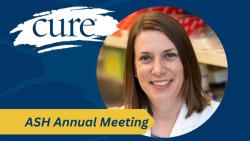
Dr. Robert Orlowski says a single-drug option in newly diagnosed myeloma may offer strong responses with fewer side effects and preserve future treatments.
Dr. Robert Orlowski presented updated ELARA trial findings on Kymriah (tisagenlecleucel) in follicular lymphoma at the 2025 ASH Annual Meeting.
In an Interview with CURE, he discussed why researchers are studying a simpler, single-drug option for newly diagnosed myeloma. He says current three- and four-drug regimens work well but still do not lead to complete responses for every patient.
In the interview, Orlowski explains that T-cell–directed therapies have shown strong activity in later treatment settings, prompting interest in trying a targeted agent earlier, when patients may have healthier T cells and more sensitive disease. He adds that multi-drug combinations can increase side effects, so a single-agent approach may offer meaningful outcomes with fewer toxicities while preserving other treatments for the future.
He says the long-term durability seen in the ELARA update supports the growing role of cellular therapies across lymphoma and myeloma research.
Orlowski serves as chairman, Ad Interim, and director of Myeloma in the Departments of Lymphoma/Myeloma and Experimental Therapeutics within the Division of Cancer Medicine, where he is also a professor of Medicine, at the University of Texas MD Anderson Cancer Center in Houston.
Transcript
Why is it important to explore a simpler, single-drug option like the drug for people who are newly diagnosed with multiple myeloma? What gaps in current treatment did it help address?
For newly diagnosed patients who are transplant eligible, as well as transplant-ineligible patients who are very fit right now, quadruplet regimens are the standard of care with four different drug classes, and for maybe older or frail patients, three-drug regimens are the standards of care. The outcomes are quite good, but we still don't reach a 100% complete response rate or 100% minimal residual disease negativity rate.
The rationale behind the study was that T-cell engagers have seen really unprecedented overall and complete response rates in relapsed, refractory disease. We thought to give it in the newly diagnosed setting first because, hopefully, patients have healthier T cells because they have gotten multiple prior lines of therapy, and hopefully the myeloma cells are more sensitive to treatment. And in part, the rationale also is that we know that adding more drugs usually adds more side effects for patients. It sometimes adds a benefit but not always.
The hope was that with a single agent, we might be able to come up with similar outcomes but fewer overall toxicities, plus we would have those other three or four drugs for later in case patients did relapse, awesome.
Transcript has been edited for clarity and conciseness.
For more news on cancer updates, research and education, don’t forget to subscribe to CURE®’s newsletters here.
Related Content: