- About Us
- Advertise / Support
- Editorial Board
- Contact Us
- CancerNetwork.com
- TargetedOnc.com
- OncLive.com
- OncNursingNews.com
- Terms & Conditions
- Privacy
- Do Not Sell My Information
- Washington My Health My Data

© 2025 MJH Life Sciences™ and CURE - Oncology & Cancer News for Patients & Caregivers. All rights reserved.
What Patients Should Know About EGFR Mutated Lung Cancer Treatment
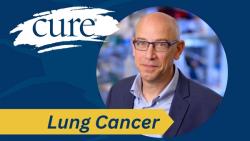
Raval serves as an associate professor in the Department of Medicine, Hematology and Oncology, at the Medical College of Georgia within Augusta University, which also includes the Georgia Cancer Center.
Dr. Girindra Raval sat down for an interview with CURE to discuss what patients with EGFR-mutated lung cancer should know about their treatment options.
Dr. Girindra Raval sat down for an interview with CURE to discuss what patients with EGFR-mutated lung cancer should know about their treatment options, highlighting the latest advancements in targeted therapies and emerging treatment options.
Raval serves as an associate professor in the Department of Medicine, Hematology and Oncology, at the Medical College of Georgia within Augusta University, which also includes the Georgia Cancer Center.
Transcript
What should patients with EGFR-mutated lung cancer understand about the latest treatment advances, including targeted therapies and emerging approaches, and how can they work with their care team to decide which options may be right for them?
We have always talked about this with our patients in what makes EGFR mutated lung cancer a unique entity. Historically, we have noticed that patients who are non-smokers, female patients, these groups were enriched in patients who developed EGFR mutated lung cancer. We have data that EGFR targeted therapies are better compared to standard chemotherapy in patients who have received resection for their cancer or received local treatment in the form of chemoradiation.
Patients who are in early stage after they receive their local treatment, be it radiation or surgery, have a disproportionately better outcome with targeted EGFR therapy compared to using the standard chemotherapy that was the standard of care until recently. We also know that immunotherapy, which we hear a lot about, has not shown efficacy in patients who have EGFR mutated lung cancer. Those trials have shown that patients who have EGFR mutated lung cancer do not respond very well to immunotherapy.
If I'm looking at the overall data of all the patients who have non-small cell lung cancer, adenocarcinoma, approximately one in five will be EGFR mutated, which is for now the second most common targetable mutation in lung cancer after KRAS, second most prevalent at least. We are looking at these overall trends in patients who have EGFR mutated lung cancer, and then now in the metastatic setting, we have these studies that have shown an impact on improving overall survival. Every escalation with these newer studies comes at a certain cost with regard to side effects.
It's important to talk to your thoracic oncologist, to talk to your oncologist and your provider, about what side effects to anticipate with these new modalities of treatment, because now we are not only combining an oral pill or an oral TKI with chemotherapy, we have other TKIs that are, at least for all practical purposes, similar but maybe more potent in binding to the EGFR receptor.
With the MARIPOSA study in the Rybrevant (amivantamab-vmjw) group with Lazcluze (Lazertinib), which is considered a little more potent than Tagrisso (osimertinib), you have improvement in the pills that you are getting, but also the combination comes with unique side effects. You want to talk about what to do to mitigate those side effects. Side effects could range from leg swelling and development of blood clots in the amivantamab and lazertinib arm. Ensure that you are on blood thinners at least for the first four months of the treatment. You want to be aware and cognizant of the skin toxicities, the site toxicities, or the low counts that both these regimens can cause.
There are newer drugs that we have, like Datroway (datopotamab deruxtecan-dlnk), which has shown improvement in progression-free survival in EGFR mutated lung cancer patients and comes with some unique toxicities: dry eyes or anterior ocular toxicities, stomatitis, interstitial lung disease. These are all toxicities that can happen, but you must be vigilant with these toxicities so that you can make sure that you're catching them earlier, so intervention can be done in a timely manner where these do not worsen the underlying prognosis.
Being aware, communicating with your provider, and being vigilant about the toxicities that could happen makes this a lot safer and would better allow patients to benefit from the developments in the field, which have shown improvement in their overall survival. As long as you are taking care of the downside of it, I think there are a lot of interesting things happening in this space and more to come.
Transcript has been edited for clarity and conciseness.
For more news on cancer updates, research and education, don’t forget to subscribe to CURE®’s newsletters here.
Related Content: