- About Us
- Advertise / Support
- Editorial Board
- Contact Us
- CancerNetwork.com
- TargetedOnc.com
- OncLive.com
- OncNursingNews.com
- Terms & Conditions
- Privacy
- Do Not Sell My Information
- Washington My Health My Data

© 2025 MJH Life Sciences™ and CURE - Oncology & Cancer News for Patients & Caregivers. All rights reserved.
11 Years Living With Stage 4 Cancer Inspires Gratitude and Reflection
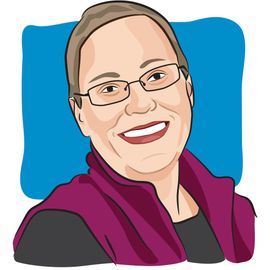
Martha lives in Illinois and was diagnosed with metastatic breast cancer in January 2015. She has a husband and three children, ranging in age from 12 to 18, a dog and a lizard.
I’ve lived with stage 4 breast cancer for 11 years, and each day brings gratitude for my family, my oncologist, and the care that keeps me going.
I first approached my primary care doctor on my birthday in December 2014. I had a lump in my breast that I hadn’t noticed before and I was worried, in part because my mother had had cancer 10 years earlier. At the time, I didn’t know that other family members had also had or likely had breast cancer. Things moved quickly from that visit: a mammogram, a biopsy the next day, a phone call, Christmas and New Year’s, a switch to a different hospital system, and an appointment with an oncologist all by the first week of January 2015.
The whirlwind of appointments and devastating news continued for another week or two, and included various full-body and brain scans, an oophorectomy, a lung biopsy, and, finally, the start of chemotherapy.
Friends, family, acquaintances, nurses, doctors shared words--and actions--of hope and help. But even with all of that immediate support, I was alone with myself and the diagnosis of metastatic breast cancer. As much as I welcomed the outpouring of love and concern, and I truly did, my vision had focused and narrowed on what was to come each day and how to stay alive for my husband and our kids, who were teens and preteens at the time.
When I think of those first months, and all the months of the past 11 years, my oncologist is a central figure. Though I doubt I play the same role in her life—after all, she has been a breast and lung oncology specialist for decades—I never fail to give thanks for her foresight, out-of-the-box thinking, deep knowledge, and her unexpected humanity.
I say “unexpected” because she is a force within her university hospital. I have been the beneficiary of the respect she inspires in others—appointments that get moved up when they see her name is just one example—but also of her thoughtfulness. As a list, these include:
New pathology of the original breast biopsy, which showed a different subtype
Providing hope with matter-of-fact visits that focused on treatment and side effects
Hearing me when I said I couldn’t be hospitalized immediately for a blood clot because my oldest was graduating high school that night
Asking me how I would feel about being treated “as if”—as if I were early stage, as if I could be cured, as if there was more hope for life
Fighting for me to remain on a working drug when the hospital pharmacy temporarily put me on something else
Trying out a stop to one treatment drug when the gastrointestinal issues were affecting my ability to live fully
Acknowledging that no one knows, yet, what the best course of treatment is for me now that I have lived so far past the median survival
Congratulating me after every good scan
Being difficult about stuff that matters—watching my heart, being frustrated when I miss an appointment, saying “don’t talk” during the physical exam so she can fully concentrate
Making me laugh (to myself only, to be clear!) when my long hair is so in the way that she creates a ponytail holder from the rim of an exam glove, when she asks me to stop tapping a pencil while she talks, when I hear her heels clicking in full Type-A mode down the hallway
How can I possibly ever give enough thanks?
This piece reflects the author’s personal experience and perspective. For medical advice, please consult your health care provider.
For more news on cancer updates, research and education, don’t forget to subscribe to CURE®’s newsletters here.
Related Content: